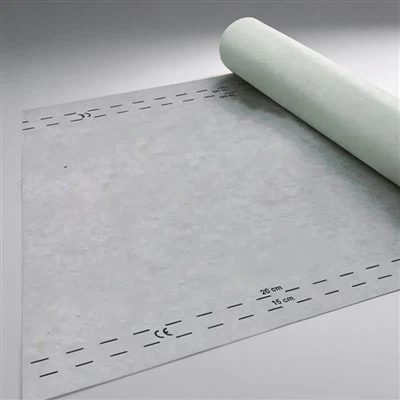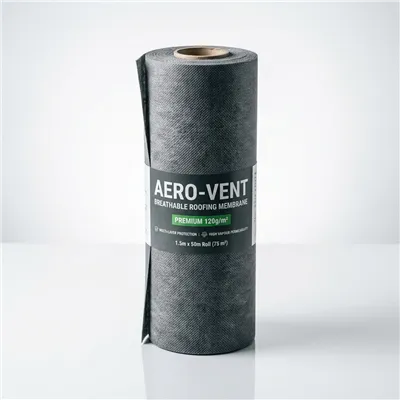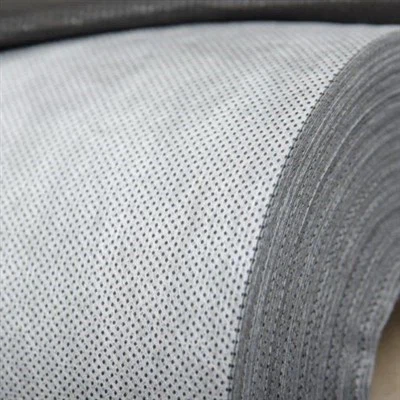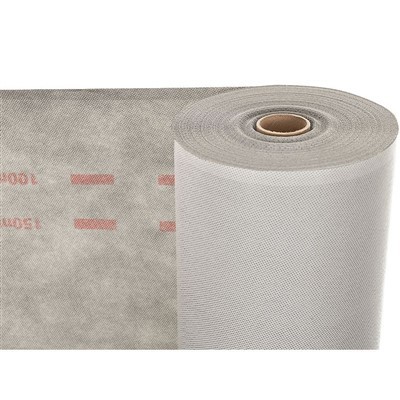


A breathable building membrane is the vapour-permeable outer layer of a roof or wall build-up. It stops wind-driven rain and snow from reaching the insulation and timber, while letting water vapour escape from inside the structure. Eastopo supplies 60-220 gsm breather membrane rolls, factory-direct and private-label, to distributors, roofing contractors and timber frame manufacturers worldwide - including the UK, EU, US, Australia and New Zealand.
This page is an overview of how breathable building membrane works in roof and wall applications, how it compares with traditional felt and vapour control layers, and how trade buyers order OEM rolls from the factory.

What Is a Breathable Building Membrane?
A breathable building membrane, often called a breather membrane in the UK, is a thin water-resistant sheet installed on the outside of a building envelope. The material is vapour permeable: it allows moisture vapour to pass out of the structure, but blocks liquid water from getting in.
On a pitched roof it sits above the rafters and below the battens, directly under the tiles. On a timber frame wall it wraps the outer face of the sheathing, behind the cladding or brickwork. In both positions the membrane protects insulation, timber and internal finishes from damp and condensation.
Eastopo manufactures a three-layer thin-film build for this duty: a UV-stabilised PP polypropylene film on the outside, a PE polyethylene microporous film in the middle, and a PP film on the underside. All three layers are thin films of comparable gauge. The microporous middle layer is what gives the sheet its vapour permeability without sacrificing water resistance.
How a Breather Membrane Works Inside a Building Envelope
The building envelope works as a system. Warm, humid air from inside a home rises into the roof void or presses against the wall cavity. When that air cools, moisture condenses on cold surfaces - rafters, sheathing, battens - and over time the damp rots the timber and soaks the insulation.
The breather membrane sits on the cold side of the insulation. It keeps rain and wind-driven moisture out, and it lets vapour from inside escape to the outside air. This two-way behaviour is what separates a breathable membrane from a vapour barrier, which blocks both directions.

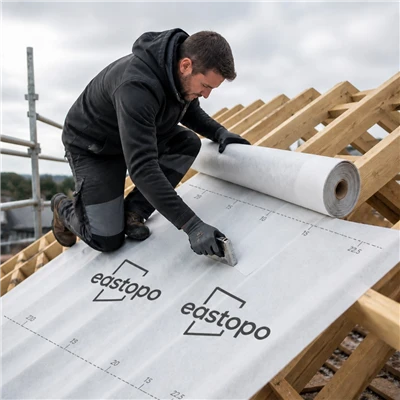
Installation matters more than most fitters expect. The membrane must be laid with the correct face out, lapped in the right direction (outer lap over inner), and held with the fixing pattern the spec calls for. A sheet that is trampled, over-stretched or fixed too tightly loses some of its performance. Counter-battening over the membrane keeps it relaxed and creates the drainage channel the detailing needs.
Roof Applications: Pitched, Cold, Warm and Unventilated Roofs
Most UK breather membrane sales go to pitched roofs. The sheet is draped over the rafters, lapped, and fixed before battens and tiles go on. In this position it replaces the traditional sarking felt, and because it is vapour permeable it allows the roof to be built without the ventilation gaps that felt roofs depend on.
Cold roofs keep the insulation at ceiling level, with a ventilated void above it. Warm roofs put the insulation at rafter level, so the membrane must manage vapour that would otherwise condense on the underside of the deck. Unventilated and hybrid designs rely on the membrane being genuinely vapour permeable - this is where a low-grade or over-specified sheet causes callbacks. On flat roofs the breather membrane serves a different role: it sits under the insulation or the waterproofing layer to vent residual vapour, which is why flat roof specifiers order the sheet by vapour resistance, not just gsm.
For contractors working on dormers, porches, extensions and garden buildings, the same roll can serve multiple jobs. A 1.5 m wide roll is the trade default in the UK market. Eastopo also supplies wider rolls up to 2.7 m for warehouse and commercial deck jobs, cut to project length.
Wall Applications: Timber Frame, Masonry and Metal Frame
Wall breather membranes are installed on the outer face of timber frame sheathing, directly behind the cladding, render or brick outer leaf. The membrane protects the OSB and the frame from wind-driven rain during the build and for the life of the structure, while letting construction moisture and in-service vapour escape.
Timber frame manufacturers use the same three-layer PP/PE/PP sheet for wall and roof positions, which simplifies site stock. For masonry walls the membrane goes on the outer face of the insulation or the inner leaf, depending on the wall build-up and the spec.
Eastopo supplies OEM rolls to frame manufacturers, offsite fabricators and specialist distributors, printed with the buyer's brand and logos to their roll length and width. For US and NZ buyers, the same sheet family is supplied as house wrap and building wrap - see our house wrap and wall WRB page for the lightweight 60-90 gsm range, and the roof sarking page for the Australian market terminology.

Breather Membrane vs Vapour Control Layer
The two sheets do opposite jobs, and mixing them up is one of the most common site errors in the trade. A breather membrane goes on the cold, outer side of the insulation and lets vapour escape. A vapour control layer (VCL) goes on the warm, inner side and stops vapour from the room entering the insulation in the first place.
A roof or wall normally needs both: a VCL on the inside, a breather membrane on the outside. Fitting a VCL on the outside traps moisture in the build-up; fitting only a breather membrane on the inside lets room vapour condense in the insulation. Our aluminium vapour barrier page covers the VCL side of the system.
Breathable Membrane vs Traditional Roofing Felt
Traditional bitumen roofing felt is vapour-tight, so a felt roof needs ventilation at the eaves and ridge to keep condensation out of the roof void. A breathable membrane removes that requirement: the sheet itself lets vapour escape, so the roof can be built tighter, with more usable loft space and fewer cold spots.
Breathable membranes are also lighter to handle, quicker to cut, and do not crack in cold weather the way bitumen felt can. The trade-off is price per square metre, which is why budget projects and garden buildings still use felt. For standard housing and extensions, the membrane is the default spec in the UK market.
The full technical specification of the 60-220 gsm range - water tightness class, vapour resistance and fixing details - is on our breathable roofing membrane page. For loft conversions and loft lining rolls, see breathable loft membrane.
GSM Grades and Roll Formats for Trade Buyers
GSM (grams per square metre) is the first number a buyer checks. It tracks strength and robustness more than waterproofing - even the lightest grade is a fully functional vapour-permeable sheet.

Eastopo produces breathable membrane rolls from 60 gsm to 220 gsm as made-to-order products. Lighter grades around 60-100 gsm suit budget projects, garden buildings and low-exposure storage. Standard grades around 110-160 gsm carry most housing and extension work, and most of our OEM volume. Heavier grades around 170-220 gsm are for heavy-duty, coastal and high-wind sites, and for low-pitch roofs with wide batten spacing where the sheet carries more load between fixings.
Roll formats follow the job: 1.5 m x 50 m is the standard trade roll, with 1.0 m and 2.7 m widths available and roll lengths cut to the project. Printing, edge marks and barcode labels are added at the factory, so the roll arrives ready for the buyer's distribution.
What Happens When a Building Membrane Fails
A failed membrane rarely fails by tearing. It fails by being the wrong sheet, or being fitted wrong, and the damage shows up months later when the warranty period has moved on.
The classic failure is a vapour barrier fitted on the outside of the insulation. Vapour from the room rises, hits the cold barrier and condenses inside the build-up. The insulation soaks, the rafters and sheathing blacken, and the first sign for the homeowner is a musty smell or damp patches on the ceiling. Reopening the roof to fix it costs more than the whole membrane order.
The second failure mode is poor detailing on a breathable membrane itself: laps laid the wrong way, tears left unpatched, or battens fixed straight through the sheet without tape at the joints. Wind-driven rain finds the gap and the structure wets from the outside. Taping laps and patching every cut is cheap insurance on a job where the sheet will be covered and forgotten for decades.
The third is buying on price alone. A low-gsm sheet on a coastal roof, or a felt on an unventilated warm roof, will fail the spec long before the tiles do. Matching the grade to the exposure - not to the lowest quote - is what separates a good job from a callback.
OEM Supply for Distributors Worldwide
Eastopo runs dedicated breathable membrane lamination lines, so the sheet you sell under your own brand is produced on the same line as our standard range. Private label orders include your brand printing on the roll edge and packaging, your choice of gsm grade, width and roll length, and a packing list matched to your distribution.
Typical OEM buyers are builders' merchants, roofing distributors, timber frame manufacturers and insulation wholesalers who want a consistent sheet under their own label. We keep the specification stable across batches - same layers, same gauge, same roll format - so your customers never see a change of product between orders.
MOQ for a private-label run is one container, with mixed widths and grades allowed in a single order. Samples with printing proofs are sent before production, and the printed film colour is matched against your brand file.
Certification and Compliance Notes
The 60-220 gsm breathable membrane range is manufactured to EN 13859-1 and verified by ICR. The factory operates under TUV-verified quality management. We do not claim certifications we do not hold, and we do not quote standards from other markets as if they applied to this product line.
Buyers in regulated projects should confirm the specific standard their project requires - EN 13859-1 for roof underlays, or the local wall membrane standard for timber frame - before specifying. Where a project requires an assessment we cannot supply, we will tell you plainly rather than stretch the paperwork.
Ordering, Lead Times and Shipping
Production lead time is 25-35 days from receipt of deposit, covering grade set-up, width, printing and packaging. The exact schedule is confirmed in the quotation. Trade terms are EXW, FOB, CFR or CIF; payment terms are confirmed at quotation.
Rolls can be packed on pallets with edge protection, or shipped loose-packed without pallets where that gives a better container load factor. The packing plan is matched to the container to maximise utilisation.
FAQ
What is the difference between a breather membrane and a vapour control layer?
A breather membrane is vapour permeable and goes on the cold, outer side of the insulation, letting moisture escape while blocking rain. A vapour control layer is vapour-tight and goes on the warm, inner side, stopping room vapour entering the insulation. Most insulated roofs and walls need one of each.
Can the same membrane be used on roofs and walls?
Yes. Eastopo's three-layer PP/PE/PP sheet is supplied for both positions, and timber frame manufacturers commonly stock one roll for the whole building envelope. Wall installation follows the same lap and fixing rules as roof installation, with the sheet on the outer face of the sheathing.
What gsm grade should I order?
Eastopo produces grades from 60 gsm to 220 gsm made to order. Lighter grades suit budget and low-exposure work, standard grades cover most housing and extensions, and heavier grades suit coastal, high-wind or low-pitch roofs. Match the grade to the worst exposure on the project.
Do you supply private-label rolls?
Yes. Eastopo produces OEM breather membrane rolls with the buyer's brand printed at the factory, in the buyer's choice of gsm, width and roll length. MOQ is one container with mixed grades and widths allowed.
How wide are the rolls?
The standard trade roll is 1.5 m x 50 m. We also supply 1.0 m rolls and wide rolls up to 2.7 m for commercial and warehouse deck jobs, cut to project length.
Which certifications does the product hold?
The range is manufactured to EN 13859-1 and verified by ICR, under TUV-verified quality management. We only reference certifications we actually hold, and we confirm project-specific requirements before quoting.
About the Author
Written by J. Mao - Eastopo New Materials. J. Mao is the Export Manager at Hangzhou Eastopo New Materials Technology Co., Ltd., specialising in breathable membrane, roof underlay and building envelope products for the UK, EU, US, Australia, New Zealand and other export markets worldwide. He has worked on OEM supply programmes for roofing distributors and timber frame manufacturers since 2016. For project specifications, samples and distributor pricing, contact J. Mao by email at mj@eastopo.com or on WhatsApp +86 193 5725 8106.
Get factory-direct pricing on made-to-order 60-220 gsm breather membrane rolls, with OEM printing available and a 25-35 day lead time from deposit. Message J. Mao on WhatsApp +86 193 5725 8106 or email mj@eastopo.com for a quotation within one working day.
Hot Tags: breathable building membrane, breather membrane, breathable membrane, vapour permeable membrane, building membrane manufacturer, OEM, Breathable Felt Membrane, Breathable Roof Membrane, Membrane Breathable, Breathable Membrane For Vents, Breathable Membrane For Shed Floor, Breathable Vapour Membrane