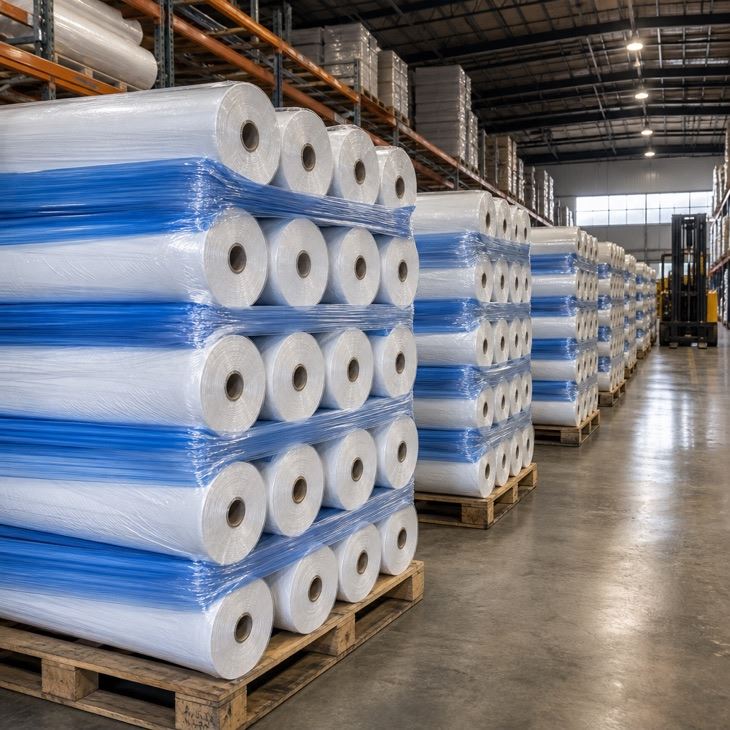
What Is a House Wrap?
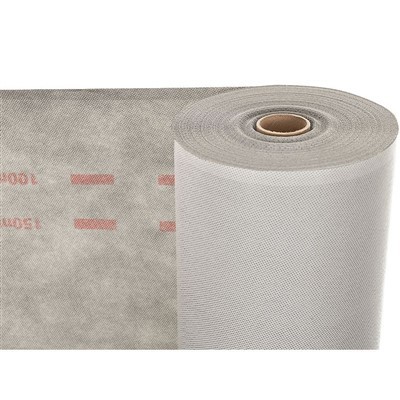
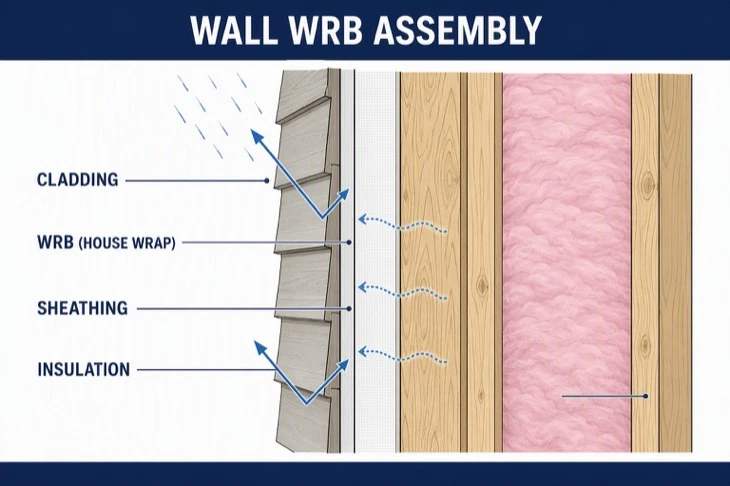
A house wrap is a weather-resistive barrier (WRB) installed over exterior wall sheathing, behind the cladding, to block wind-driven rain while letting water vapour escape from the wall cavity. Eastopo supplies 60-90gsm lightweight SFS house wrap in 2.74m (9ft) rolls, with OEM printing and private label for US and NZ buyers.
Builders call it house wrap. Specifiers call it a weather-resistive barrier, a wall wrap, or a building wrap. The job is the same on every site: keep liquid water out of the wall assembly and let the structure dry to the outside.
Why a Wall Needs a Weather-Resistive Barrier
Exterior walls are the most punished part of a building. Wind-driven rain hits the cladding face, runs down behind it, and finds every gap at windows, doors and junctions. Without a WRB, that water lands directly on the sheathing and the framing.
At the same time, moisture moves outward from inside the building. Wet timber dries, fresh concrete off-gasses, and warm interior air carries vapour toward the cold side of the wall. A wall that cannot dry from the outside traps that moisture in the cavity, where it feeds rot and mould.
The weather-resistive barrier sits between the two. It stops the rain that gets past the cladding, and it passes the vapour that has to get out. A 60-90gsm wall grade is built for this duty: lighter than a roof underlay because the wall does not take weeks of open exposure, yet tough enough to survive installation and the life of the cladding.
House Wrap Is Not Roof Underlay: What Changes on the Wall
House wrap and roof underlay belong to the same membrane family - vapour-permeable, water-resistant sheets built around a microporous film. The physical principle is identical. The specification is not.
A roof underlay sits under tiles or slates on a slope, takes wind zone loading, and can stay exposed for three to four months while the roof is completed. A wall wrap hangs vertically on sheathing, is covered by cladding within weeks, and works as a drainage plane rather than a primary weather layer.
That difference is why we make wall wraps at 60-90gsm while our roof membranes run 60-220gsm. Lighter on the wall means easier handling, less waste at openings, and a lower cost per square metre without giving up the water resistance the wall needs.
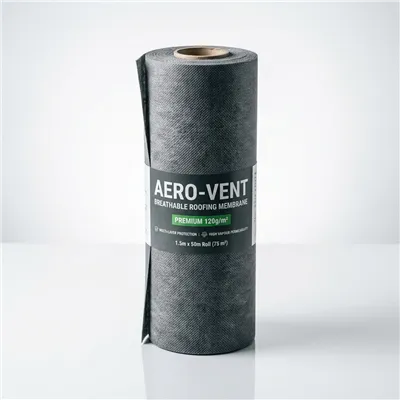
For roof work, see our breathable roofing membrane range at 60-220gsm. This page covers the wall side of the same family.
What Happens When a Wall Wrap Fails
Wall wrap failure is rarely dramatic. It is a slow soak that shows up as rot, staining or insect damage years after the cladding went on.
Case one: a budget coated sheet without UV stabilisers. The cladding contractor is delayed, the sheet sits in the sun for months, and it embrittles. By the time the siding goes up, a gust has torn the sheet at a staple and a window flashing gap is letting rain straight into the cavity. The fix means pulling cladding off the whole elevation.
Case two: laps installed upside down, or an unsealed seam at a corner. Water running down the wall finds the lap edge, wicks in, and soaks the sheathing behind the wrap. The wall looks fine from outside for two years, then the rot reaches the studs.
Both failures trace back to one decision: buying the wrap on price per roll instead of construction reality. In an SFS house wrap, the spunbond layers carry the tears that kill cheap coated sheets, and the microporous film keeps the wrap breathable even when the drainage plane is doing its job.
SFS Build: Nonwoven + Microporous Film + Nonwoven at 60-90gsm
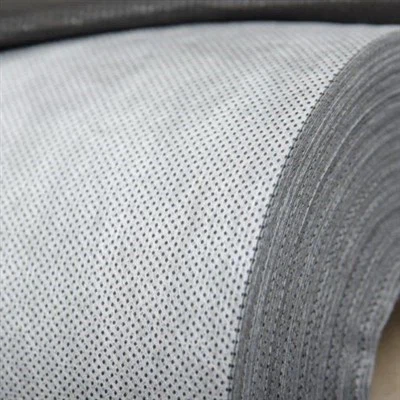
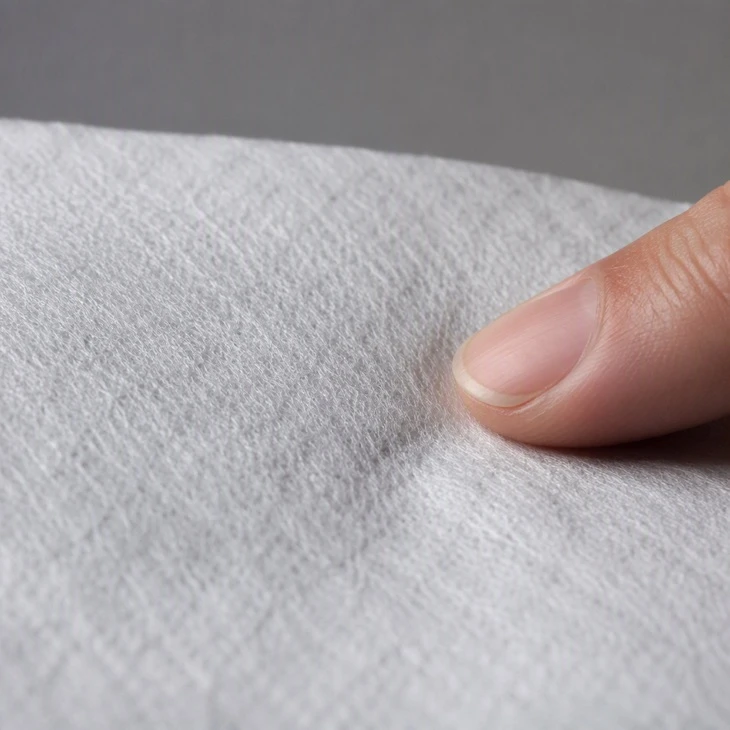
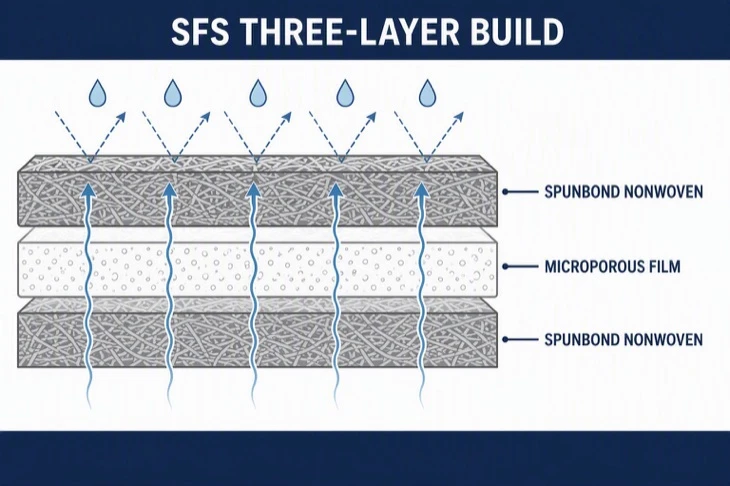
SFS stands for spunbond-film-spunbond, and it describes exactly what our 60-90gsm house wrap is made of. Two layers of spunbond polypropylene nonwoven surround a central microporous film. Each layer has one job.
- Spunbond nonwoven (outer) - carries the mechanical strength. It takes the cap staples, shrugs off trades walking past it, and stops a tear from running the length of the sheet.
- Microporous film (middle) - does the weather work. It passes water vapour out of the cavity and blocks liquid water coming in.
- Spunbond nonwoven (outer) - protects the film from the sheathing side and gives the wrap its cloth-like feel for easy handling.
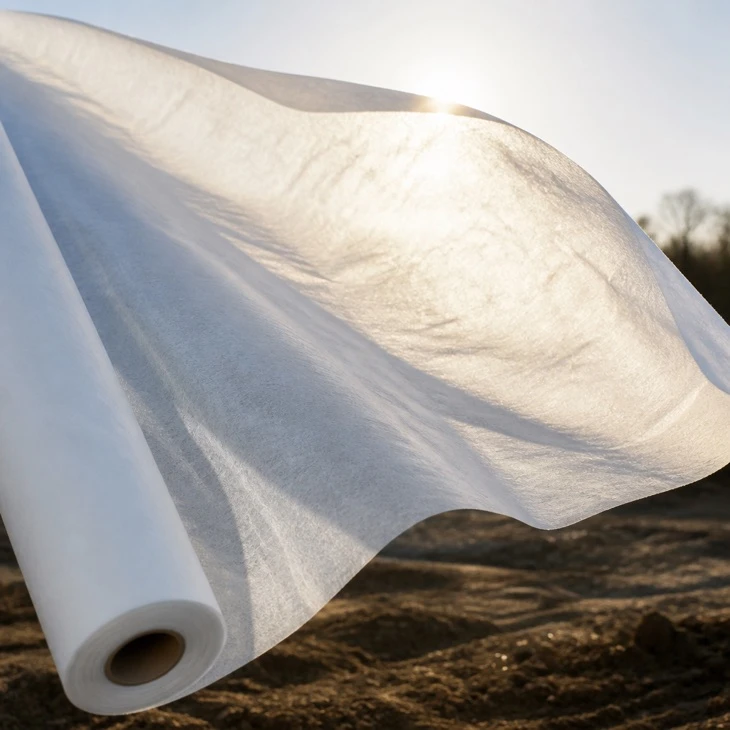
At 60-90gsm the whole build stays light - roughly the weight class US builders expect from a wall wrap, not a roof membrane. The sheet is flexible, folds cleanly around openings, and stays translucent enough for studs to show through on site.
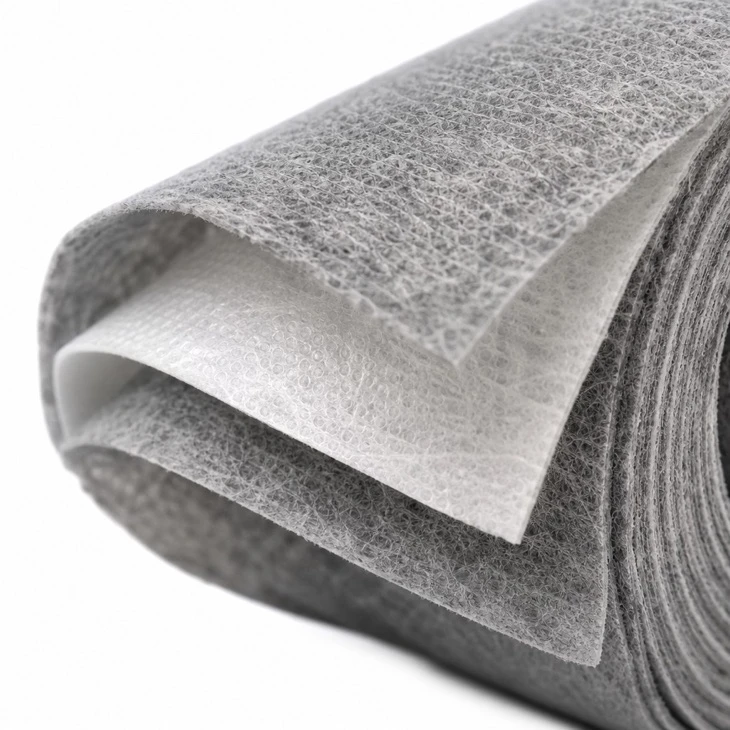
All three layers are made from virgin polymer. No recycled content that embrittles under UV or splits at the laps after a few seasons.
Tyvek-Class Performance, Factory-Direct Price
DuPont Tyvek defined the house wrap category, and every serious wall wrap since has been compared against it. That is the benchmark we build to: a vapour-permeable weather-resistive barrier that installs fast and performs for the life of the wall.
What we do not do is charge the branded price that goes with it. Eastopo is a factory-direct supplier - the same SFS construction, the same 2.74m (9ft) roll widths, and OEM printing that puts your brand on the sheet. US and NZ importers and distributors use our rolls as their private label house wrap line.
If your market requires a specific test protocol or certification, send it with your inquiry. We confirm the specification, the test method and the target values before production - the same way the supplier data sheet is agreed, so the numbers on the page match the rolls in the container.
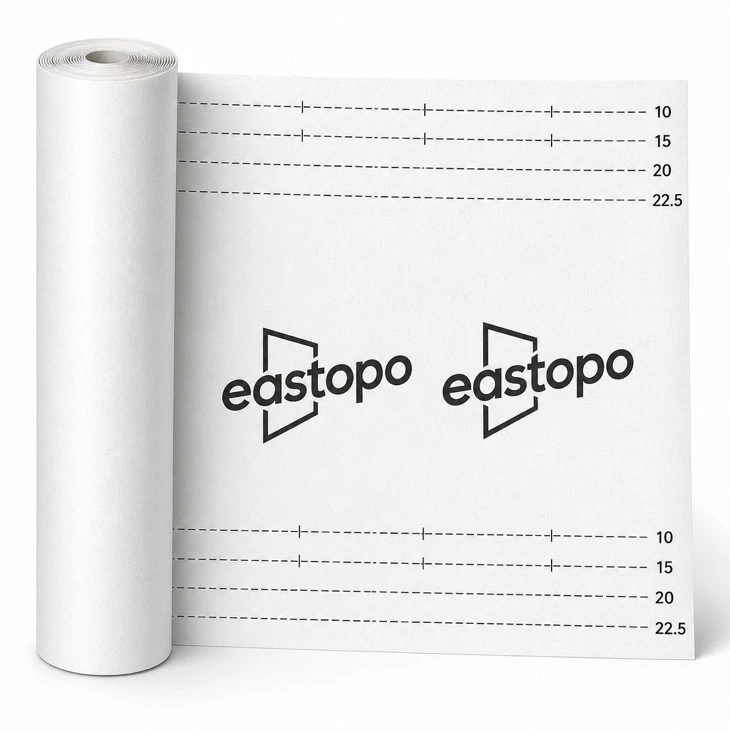
Technical Data: 60-90gsm Lightweight Grades
Values below are production-verified per the supplier data sheet and span the full grade range we run for wall wrap supply. Confirm target values and test methods with our export team before ordering.
| Parameter | Value | Benefit |
|---|---|---|
| Structure | SFS - spunbond + microporous film + spunbond | Tear resistance, cloth-like handling |
| Standard weight | 60 - 90 gsm | Lightweight wall duty, easy handling |
| Roll width | 2.74m (9ft) | US and NZ standard wall wrap width |
| Hydrostatic head | ≥2000 mm | Blocks wind-driven rain at the wall face |
| Water vapour permeability | ≥1000 g/m²/24h | Lets the wall cavity dry outward |
| Tensile strength | ≥180 N/5cm | Survives installation and trades traffic |
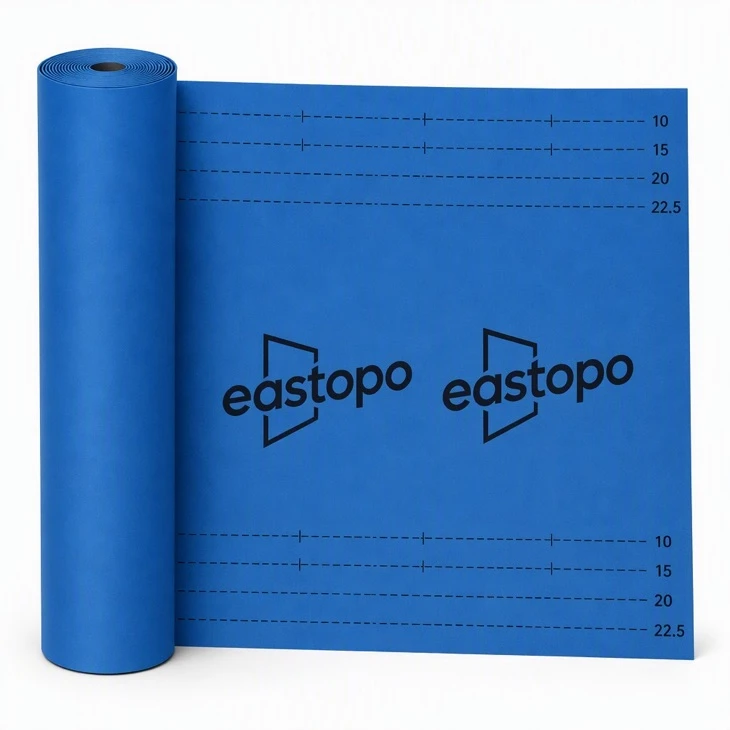
| Colour options | White, blue, ice grey, deep blue, black, lemon yellow | Colour-coding and brand matching |
| UV exposure | Short-term wall duty | Cladding covers within the build sequence |
| Customisation | Printing, roll length, packaging | OEM and private label ready |
The two numbers that matter most to buyers are weight and width. 60-90gsm keeps the wall wrap light and cost-effective, and 2.74m (9ft) means one roll covers a full stud wall height without a horizontal seam at the mid point.
Installing the WRB: Sheathing, Laps and Flashings
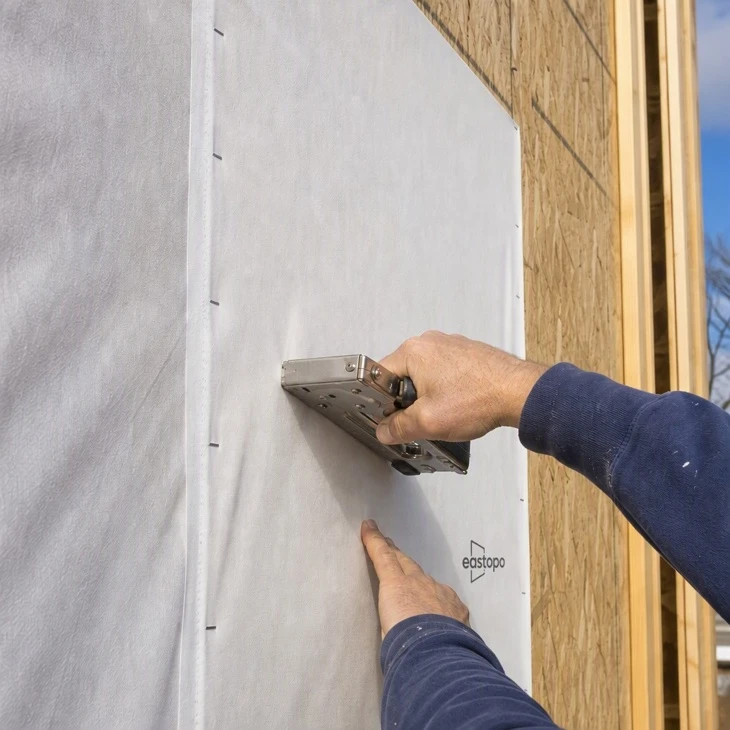
Installation is where a wall wrap earns or loses its value. The sheet is the second line of defence after the cladding, so the details decide the outcome.
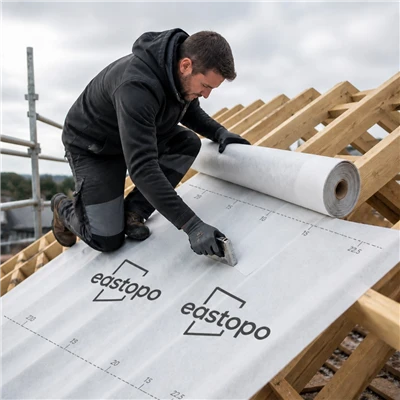
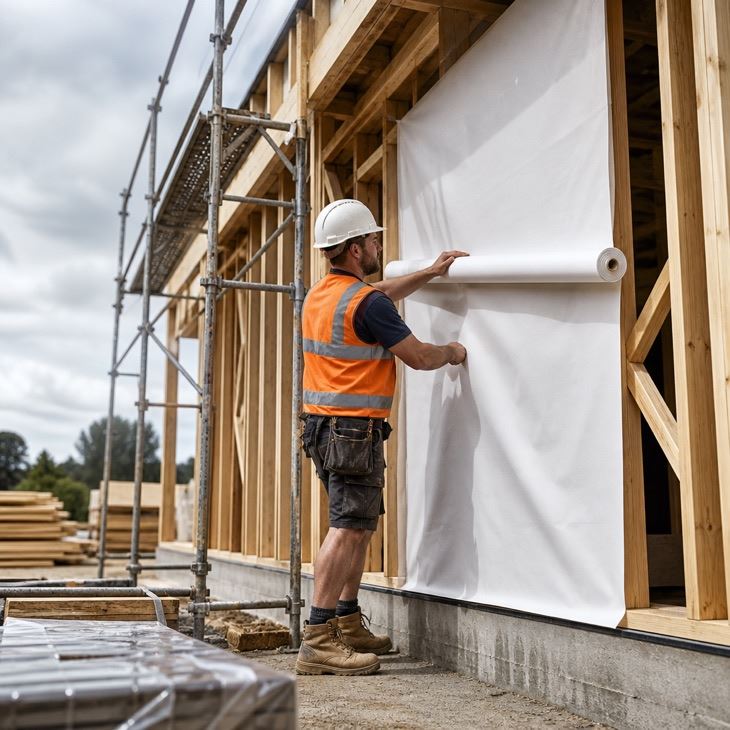
Start at the bottom of the wall and work up, so each upper sheet laps over the one below - horizontal laps of at least 150mm, vertical laps of at least 100mm. Fix with cap staples along the edges; cap staples spread the load and stop the sheet tearing out in a gust.
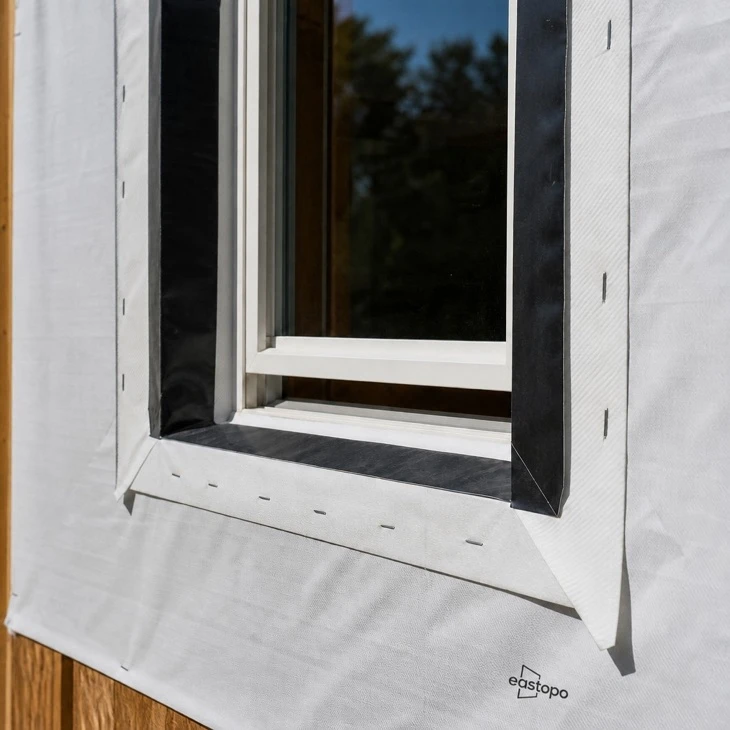
Windows and doors come first. Install flashings before the wrap, then cut the wrap across the opening and fold it into the opening frame so water drains past, never behind, the flashing. Seal laps and cuts with compatible tape rather than relying on staples alone.
The wrap is the drainage plane: any water that gets behind the cladding runs down the wrap face to the base of the wall. Keep the cladding back-vented where the assembly requires it, and never block the drainage path with insulation stuffed against the sheet.
US and NZ Market Language: WRB, Perms and Building Wrap
The same product travels under different names, and knowing the local language is part of buying it right. In the United States, wall assemblies are required to include a weather-resistive barrier behind the exterior cladding - the trade calls it WRB, and buyers searching for a vapor permeable house wrap compare products by perm rating, a measure of vapour permeability, alongside air barrier questions where the assembly requires it.
In New Zealand and Australia the same membrane is a building wrap or wall wrap, supplied in the same 2.74m (9ft) width the NZ market buys from local merchants. In the UK and Europe it is a breather membrane, used on walls and roofs alike.
| Market | Term | What buyers ask for |
|---|---|---|
| United States | House wrap / WRB | Weather-resistive barrier, perm-rated, 9ft rolls |
| New Zealand | Building wrap / wall wrap | 2.74m x 37m rolls, wall underlay |
| Australia | Building wrap / sarking | Wall wrap and roof sarking applications |
| UK / Europe | Breather membrane | Vapour-permeable membrane, wall and roof |
Tell us your market and your terminology, and we will match the roll format, the printing and the documentation to what your buyers expect.
OEM House Wrap: 9ft Rolls, Your Brand, Your Spec
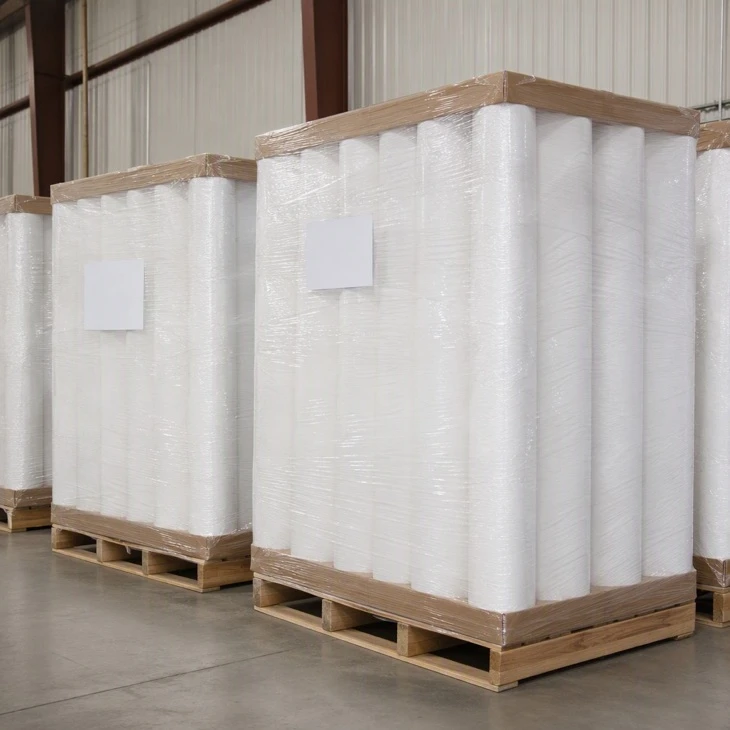
This is the part of the supply chain that matters to distributors and importers: the factory behind the brand. Eastopo is a house wrap manufacturer and OEM supplier of 60-90gsm SFS house wrap to US and NZ buyers under their own labels, with the specifications and packaging set by the customer.
- Weight grades within 60-90gsm, set to your target price point.
- 2.74m (9ft) rolls as standard, custom lengths on request.
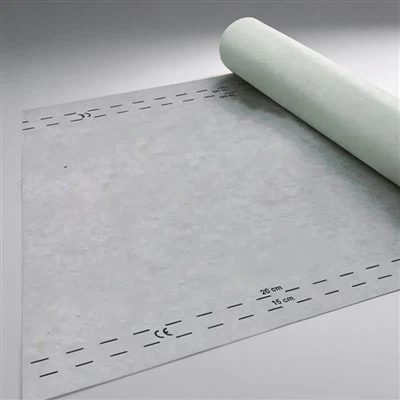
- Your logo and branding printed on the sheet, including dashed installation guides.
- Colour options: white, blue, ice grey, deep blue, black and lemon yellow.
- Sample matching: send us the roll you currently buy, and we match the spec or tell you honestly where we cannot.
- Incoterms: EXW, FOB, CFR or CIF - your call.
Typical OEM lead time is 15-20 days for container quantities, with batch records, roll labels and pallet packaging aligned to your paperwork. Send the specification to mj@eastopo.com with the target volume and you will get a quotation with samples behind it - not a brochure.
Frequently Asked Questions
Is house wrap the same as building wrap?
Yes - they are the same product under different regional names. House wrap is the US term for a weather-resistive barrier behind exterior cladding; building wrap is the New Zealand and Australian name for the same membrane, in the same 2.74m (9ft) width. The construction is identical: a vapour-permeable, water-resistant sheet built around a microporous film.
What is the difference between a house wrap and a vapour barrier?
They are opposites. A house wrap passes water vapour out of the wall cavity and blocks liquid water coming in. A vapour barrier blocks vapour entirely and goes on the warm side of the insulation to stop moisture entering the build. Fitting a vapour barrier where a house wrap is needed traps moisture inside the wall and causes the rot you are trying to prevent.
Is 60-90gsm house wrap strong enough for exterior walls?
Yes, for wall duty. A wall wrap is covered by cladding within the build sequence and does not take the open exposure or wind loading of a roof underlay, so the lighter 60-90gsm grade is the right call - it handles easier, wastes less at openings and costs less per square metre. The SFS construction keeps the tear resistance where it matters, at the staples and the laps.
What width are house wrap rolls?
Our house wrap is supplied at 2.74m (9ft) wide as standard - the width US and NZ builders expect, covering a full stud wall height without a horizontal seam at the mid point. Custom roll lengths are available on request for OEM orders.
Can Eastopo print my brand on house wrap rolls?
Yes. OEM printing is a core part of our supply - your logo on the sheet, dashed installation guides, custom colours and your own packaging. Weight grades within 60-90gsm and roll lengths are set to your specification, with a 15-20 day lead time for container quantities.
Do you have US certification for house wrap?
We supply to the specification and test protocol your market requires, confirmed before production - send your test method and target values with the inquiry and we will confirm the specification against the supplier data sheet and samples. OEM buyers typically validate their own certification path on the imported rolls; we support that with full batch documentation.
About the Author
Written by J. Mao - Eastopo New Materials. J. Mao works directly with US and NZ importers, distributors and building material merchants on house wrap and WRB specifications, SFS construction and OEM supply. Questions on grades, samples or project specs: mj@eastopo.com or +86 193 5725 8106.
Get a Sample, Not a Sales Page
Tell us the wall assembly, the market, and the roll you currently buy. We will come back with a grade recommendation, a quotation and a sample. If our house wrap is not the right fit, we will say so.
Email: mj@eastopo.com | WhatsApp: +86 193 5725 8106 | Send Inquiry
View the full range: Breathable Membrane - Breathable Roofing Membrane - Roof Sarking Breathable Roofing Felt - Breathable Loft Membrane
Hot Tags: house wrap, wall WRB, weather-resistive barrier, house wrap manufacturer, vapor permeable house wrap, building wrap, 9ft house wrap, house wrap OEM, Breathable Building Membrane, Breathable Felt, Breathable Membrane For Timber Cladding, Breathable Membrane Under Cladding, Breather Foil Membrane, Waterproof Breathable Membrane