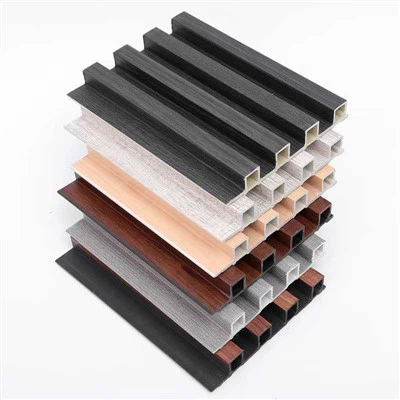


What a UV Marble Sheet Factory Produces
A UV marble sheet is a solid PVC wall panel printed with a marble pattern and sealed under an ultraviolet-cured resin coating. The cured layer delivers 2H pencil hardness, scratch resistance and anti-yellowing performance that a plain printed panel cannot match. Distributors and contractors specify it in place of ceramic tiles or natural stone for hotel lobbies, retail fit-outs and residential feature walls.
The construction is three parts. A solid PVC substrate carries the dimensional stability, a high-definition printed layer carries the veining, and the UV-cured coating carries the durability. Each part has a budget version, and each budget version fails differently on site. A sheet that looks identical in a showroom photo can cut, screw, yellow and scratch in completely different ways after a year on a wall. That is why importers compare construction, not finish names.

Why the "UV" Matters: How the Curing Process Builds the Hard Surface
The UV step is a chemical process, not a marketing label. A liquid resin is roller-applied over the printed pattern, then passed under ultraviolet lamps that cross-link the coating into a hard, glossy shell. The cure is what turns a soft wet coat into a surface rated 2H on the pencil hardness scale. Skip a full cure or thin the coat to save resin, and the sheet dulls within months.
A properly cured UV layer is part of the sheet, unlike a decorative film that is laminated on and can lift at the edges. It shrugs off cleaning abrasives, trolley scuffs in hotel corridors and the dilute chemicals used in bathrooms and kitchens. It also resists the amber yellowing that cheap clear coats develop under strong lighting. For a building owner the arithmetic is simple: the same damp-wipe routine as the rest of the wall, with no sealing, polishing or waxing programme.
UV Marble Sheet vs Marble Wallpaper, Ceramic Tile and Natural Stone
Buyers compare four finishes when a marble look is on the spec. The decision comes down to weight, water resistance, installation schedule and pattern control.
| Factor | UV Marble Sheet | Marble Wallpaper | Ceramic Tile | Natural Stone |
| Weight on wall | Light, one-person handling | Lightest, but tears and bubbles | Heavy, adds wall load | Heavy, structural substrate needed |
| Water resistance | Fully waterproof, 0.5% absorption or less | Peels in humidity | Waterproof, grout lines need care | Needs sealing, stains easily |
| Installation time | Hours, adhesive and trim system | Fast, but surface prep is critical | Days, wet trade and curing | Days, specialist cutting and fixing |
| Pattern control | Book-matched, custom colours | Print limited by roll width and seams | Fixed factory patterns, batch shift | Natural variation, limited selection |
| Maintenance | Wipe clean, no sealing | Cannot be scrubbed, restick needed | Grout cleaning and re-sealing | Periodic sealing and polishing |
Wallpaper wins on first cost and loses everywhere a wall gets wet or touched. Tile and stone win on perceived prestige and lose on schedule, weight and maintenance. The UV marble sheet sits in the middle: the stone look without the stone programme, which is why it has moved from a decorative item to a standard specification in commercial interiors.

How Distributors Plan Stock and Custom UV Marble Sheet Orders
Distributors normally separate standard finishes from custom programmes. Standard patterns are suited to repeat stock orders, while custom patterns require an approved physical reference, a defined packaging plan and a production schedule tied to the buyer's launch or project programme.
For an importer this matters at order-planning time. A standard finish uses an existing master sample; a custom pattern is developed against a physical reference and locks production to the approved master. Minimum order quantity and lead time are confirmed against the selected specification, quantity and packaging. Eastopo quotes EXW, FOB, CFR or CIF.
UV Marble Sheet Sizes, Thicknesses and Finishes
The standard range below comes from the factory specification sheet. A 1220 x 2440 mm sheet is a true 4 x 8 ft board and covers 2.98 sqm, which is the module most fitters and joiners already work to.

| Feature | Specification | Core Benefits |
| Dimensions | Width: 122 cm; Length: 244 / 260 / 290 cm | Large-format sizes minimize seams and maximize coverage efficiency. |
| Structure & Thickness | 2.0 - 5.0 mm solid core options | Flexible adaptation for various scenarios; high impact resistance and screw-holding strength. |
| Material Composition | Virgin + screened recycled PVC blend with eco-friendly calcium-zinc stabilisers | Controlled blend with no lead or cadmium; screened recycled content keeps the board dense, uniform and odour-free. |
| Surface Finish | UV-cured protective layer, 2H+ pencil hardness | Scratch-resistant, anti-yellowing and stain-repellent for lasting beauty. |
| Waterproof Performance | Water absorption 0.5% or less, tested to EN 13245-2 section 5.4 | Suitable for showers, pools and all high-humidity zones. |
| Certification | CE to EN 13245-2 for solid PVC profiles | Certificate No. SC-PSC-4-2026-06-54 |
| Order quantity | Confirmed against the selected specification | Recorded in the written quotation. |
| Lead Time | 18-22 days stock; 28-35 days custom | Plan reorders against project programmes. |
| Incoterms | EXW / FOB / CFR / CIF | Quoted per shipment method. |
Finish options cover high-gloss for a polished-stone look and matte for a honed, modern feel. Both carry the same UV-cured topcoat. Standard stock covers the 2440 mm and 2600 mm lengths, with 2900 mm available for larger runs. Custom lengths and thicknesses within the 2.0-5.0 mm range are available for OEM runs; confirm unusual sizes with the export team before ordering, because the sheet is supplied flat, wrapped and palletised for sea freight.
What a UV Marble Sheet Costs: Price Drivers Explained
Factory pricing for a UV marble sheet is quoted per square metre and scales with four variables: thickness, print complexity, coating quality and order volume. A 3 mm sheet in a single-colour marble pattern costs less than a 5 mm board with a multi-tone veining design, because print time and resin consumption both rise with pattern complexity.
The price trap is the coating. A thin or under-cured UV layer is the cheapest way to cut cost, and it is invisible in a sample photo. The sheet looks identical in the showroom and dulls within a year on site. The same logic applies to the compound: a board filled with 40-60% calcium carbonate costs less to extrude and fails differently under a knife or a screw. When a quote comes in well below the market range, ask what was removed to get there. We quote against the controlled blend and the full-cure coating, and we confirm the order quantity, lead time and trading terms in the written quotation so the comparison is honest.
How to Choose a UV Marble Sheet Factory or Supplier
Certification and Compound
Five checks separate a factory that can hold a spec from one that sells samples. First, certification: the sheet line should be CE certified to EN 13245-2 for solid PVC profiles, documented under Certificate No. SC-PSC-4-2026-06-54. Second, the compound story: a controlled virgin and screened recycled PVC blend with calcium-zinc stabilisers, no lead and no cadmium, is the difference between a dense uniform board and one with flecks and odour.
Batch Control and the Sample Process
Third, batch control: pattern and colour should be locked per production batch, so the second shipment matches the first. Fourth, the sample process: a genuine OEM supplier develops against your physical sample or Pantone reference, produces an approved master, and locks production to it.
Commercial Terms and Inspection
Fifth, the commercial terms: minimum order quantity, lead time and trading terms must match the exact specification. Eastopo confirms these points in the written quotation, offers EXW, FOB, CFR or CIF, and can discuss third-party inspection before shipment. Samples can be reviewed before order confirmation.
Common UV Marble Buying Mistakes
The failures are predictable, and each one traces back to a decision made before the container left the factory. High-filler boards arrive with broken corners and hairline cracks that only show after the pallet is unwrapped. Thin clear coats go amber within a year under strong lighting or humidity. Unscreened recycled content shows flecks and streaks in the cut face, and a print line that is not locked to an approved master produces a second batch with different veining density. Each of these failures means a strip-out on site or a claim on the freight.
A thirty-second site test filters most of it. Cut a corner off the sheet: a well-blended board cuts clean with a smooth, even section across the full thickness, while a high-filler board shows a chalky, powdery face that dusts under a knife. Flex a sample and it should return without creasing. Scratch the surface with a coin and the UV layer should hold. Lay two sheets side by side and compare pattern and colour across the batch. Put these checks in your incoming inspection before the first pallet is accepted.
Verified Product Data
Use these records as the starting point for factory due diligence; request the underlying files before order confirmation.
Documented standard: EN 13245-2, Certificate No. SC-PSC-4-2026-06-54.
Water absorption: 0.5% or less under EN 13245-2 section 5.4.
Available evidence: certificate copy, product specification, approved sample reference and order-specific batch QC records.
Technical review date: 2026-10-22.
Frequently Asked Questions
Which documents should a UV marble sheet factory provide?
Request the applicable certificate, product specification, sheet dimensions, material and surface description, approved sample reference and order-specific QC plan. For Eastopo's documented PVC panel line, the certificate is EN 13245-2, Certificate No. SC-PSC-4-2026-06-54. Check that the holder, product family and claimed standard match the goods being quoted.
What should buyers inspect on a UV marble sheet sample?
Inspect the cross-section, edge quality, print definition, background colour, gloss consistency and protective film. Cut a small offcut and check for a uniform core rather than a chalky or flecked section. Compare multiple sheets where possible because pattern and colour consistency cannot be judged from one carefully selected sample.
How should two factory quotations be compared?
Align the sheet size, thickness, core composition, surface finish, coating requirement, packaging, inspection scope, Incoterm and destination before comparing price. A low quote may omit packaging, use a thinner specification or apply a different finish. Ask each supplier to state exclusions and confirm the production specification in writing.
Can buyers arrange third-party inspection before shipment?
Third-party inspection can be discussed before order confirmation. Define the inspection stage, sampling plan and acceptance points in advance, including dimensions, appearance, pattern reference, packaging and quantity. Inspection should be tied to the approved specification; an inspector cannot resolve an acceptance standard that the buyer and factory never agreed.
How can buyers distinguish a UV-cured sheet from a plain printed panel?
Ask the supplier to identify the coating stage and provide the surface specification. Inspect gloss uniformity and run an agreed sample check on an offcut rather than relying on a photograph. A UV-cured layer protects the printed pattern, while a plain printed surface leaves the decoration more exposed to abrasion and cleaning wear.
How is order quantity confirmed with a factory?
Minimum order quantity depends on thickness, finish, colour, packaging and whether the pattern is standard or custom. Send the complete specification and expected quantity with the RFQ. A responsible factory confirms the applicable production quantity in its written quotation rather than using one generic figure for every combination.
About the Author
Written by J. Mao - Eastopo New Materials
J. Mao is the Export Manager at Hangzhou Eastopo New Material Technology Co., Ltd., a Zhejiang-based manufacturer of PVC wall and ceiling panels, marble-effect sheets and waterproof cladding systems. He has spent his career matching factory production lines to distributor and contractor requirements across the UK, EU, US, Australia, New Zealand and the emerging markets where UV marble demand is growing fastest, with a focus on specification-grade products rather than commodity boards.
Questions about this specification or an OEM enquiry: mj@eastopo.com | WhatsApp: +86 193 5725 8106
Hot Tags: , UV Marble, PVC Marble Sheet, Room UV Marble Sheet, UV PVC Marble, uv pvc marble sheet