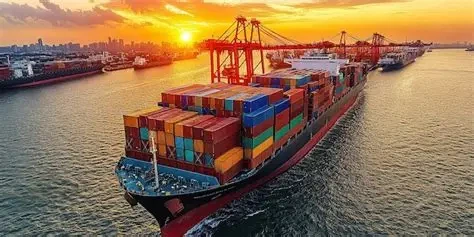

The international shipping market has entered a highly volatile phase. Since entering June 2026, B2B importers across Europe and the UK have been hit by a massive surge in ocean freight rates. Spot container rates on major Asia-to-Europe and Asia-to-UK routes have skyrocketed, in some cases exceeding twice the rates seen in begining of second quarter.
For international procurement managers, especially those sourcing high-volume, low-to-medium unit value products like PVC wall panels, ceiling panels, acoustic panels and other building and decorative materials, this freight spike is not just a logistics headache-it is a direct threat to profit margins and supply chain stability.
In this market brief, we break down why this is happening, analyze the exact mathematical impact on your landed cost, and provide four actionable supply chain adjustments you can make today to mitigate these costs.
1. Why Have Shipping Rates Surged?
A perfect storm of logistical bottlenecks is driving the current rate hikes. Sourcing and logistics managers must understand these root causes to accurately forecast the duration of this disruption:
* Ongoing Red Sea Diversions (Cape of Good Hope Route): Major shipping lines continue to avoid the Suez Canal, routing vessels around the Cape of Good Hope. This adds approximately 10 to 14 days to transit times and absorbs a massive amount of global vessel capacity.
* Early Peak Season Front-loading: Anticipating further delays and potential tariff adjustments later in the year, European and US wholesalers have front-loaded their peak season orders. The typical "August-October" shipping rush started in May this year, overwhelming carrier capacity.
* Severe Container Shorthand & Port Congestion: Empty containers are stuck on longer voyages around Africa, creating a acute container shortage at key Asian exporting hubs. Major transshipment ports, including Singapore and Rotterdam, are experiencing severe congestion, further tying up active capacity.
* Aggressive GRI and PSS Implementation: Carriers have rolled out rapid General Rate Increases (GRI) and heavy Peak Season Surcharges (PSS), driving spot rates for 40ft High Cube (HQ) containers past critical thresholds.
2. The Margin Squeeze: How Freight Spikes Impact Low-Value, High-Volume Materials
For premium high-value electronics, a $3,000 shipping rate increase represents a negligible percentage of the overall value. However, for building materials, freight is a major component of the final Landed Cost.
Let us look at a real-world calculation comparing the impact on an import order of Standard PVC Wall Panels shipped in a 40' HQ container:

Key Takeaway for Procurement Managers:
In this scenario, a $4,000 freight increase increases the total landed cost of your PVC panels by over 20%. If your retail or project margins are tightly capped, this freight increase can completely wipe out your projected profitability.
To calculate your exact risk exposure, use this basic formula:
3. Four Actionable Sourcing Strategies to Mitigate High Freight Costs
Sitting out the market is rarely an option when construction timelines and commercial commitments must be met. Successful B2B importers are adapting their strategies in four ways:
Strategy 1: Maximize Container Loading Efficiency (The 40' HQ Blueprint)
When freight is high, wasted space inside a container is wasted cash. If your supplier packages goods loosely, you are paying to ship air.
* What to do: Work with manufacturers who offer customized, high-density packaging and loading layouts. For instance, at Eastopo, we design custom loading plans for our PVC panels, nesting tongue-and-groove profiles to maximize the square-meter loading capacity of every 40' HQ container. Transitioning from poorly optimized pallets to custom floor-loading can increase container capacity by 15-25%, effectively reducing the per-unit shipping cost.
Strategy 2: Pivot from JIT (Just-in-Time) to JIC (Just-in-Case)
The combination of longer routing around Africa and port congestion means the traditional Just-in-Time supply chain model is highly risky.
* What to do: Extend your lead-time forecasts by at least 21 to 30 days. European distributors must secure larger buffer stocks. While this requires more working capital, it protects your business from stockeouts, project delays, and the astronomical costs of air-freight or local emergency sourcing.
Strategy 3: Optimize Your Sourcing Framework – FOB vs CIF
Many importers default to FOB (Free on Board) terms, managing ocean freight through their own forwarders. In a low-rate environment, this grants control. In a surging market, it can be a disadvantage.
* What to do: Ask your Chinese manufacturer for a comparative CIF (Cost, Insurance, and Freight) quote. Top-tier, high-volume exporters often hold long-term, VIP contract rates with major shipping lines. These carrier service contracts (contract rates) are insulated from the wild fluctuations of the spot market, allowing the manufacturer to secure lower freight rates and guaranteed slot space than an independent importer's spot booking.
Strategy 4: Consolidated LCL & Mixed-Product Containers
If you cannot justify importing full container loads (FCL) of a single product SKU under high freight rates, do not stop purchasing entirely.
* What to do: Partner with suppliers who manufacture a wide portfolio of compatible materials. This allows you to import mixed containers (e.g., combining PVC wall panels, SPC flooring, and WPC cladding in a single 40' HQ). This keeps your inventory lean across multiple SKUs while maintaining the lower shipping cost per unit of FCL relative to high-rate LCL (Less than Container Load) shipping.

4. How Eastopo Helps European and UK Partners Navigate This Crisis
As an established manufacturer of PVC wall panels and interior decorative materials, Eastopo is actively working to shield our global wholesale and distribution partners from the worst of this freight spike.
We have implemented three immediate support measures for our active accounts in Europe, the UK, and the Americas:
1. Strategic Space Allocation via Long-Term Carrier Partnerships: Because of our high export volume, we maintain direct contracts with tier-1 shipping lines. We can help our partners secure container space and booking slots even when spot market availability is virtually frozen.
2. Advanced Volumetric Packaging Optimization: Our engineering team simulates container loading utilizing specialized software for every order, ensuring every cubic centimeter of your 40' HQ is utilized. We achieve some of the highest loading densities in the PVC manufacturing industry.
Facing a margin squeeze on your upcoming construction or import projects?
Don't guess your landed cost. Contact the Eastopo logistics and sourcing team today. We will provide a complete, transparent breakdown of current freight options, high-density loading plans, and optimized product portfolios to keep your business profitable in this challenging shipping climate.